
A fleet doesn’t fail all at once but through patterns of small, recurring defects leading to downtime, breakdowns, and risks. In Irving and DFW, these patterns accelerate due to tight schedules and high utilization. Regular inspections and verified repairs can break these cycles. Evaluate your diesel shop systematically, focusing on capability, controls, capacity, and accountability, not just price.

A fleet does not fail all at once. It fails in patterns—small, recurring defects that gradually lead to downtime, roadside breakdowns, and compliance risks. In Irving and the wider DFW freight scene, these patterns speed up because routes are time-critical, utilization is high, and trucks rarely stay idle long enough for problems to “wait politely” for the next service. A genuine Fleet Service Partnership aims to break these patterns through regular inspections, verified repairs, and dependable documentation.
Before you commit your fleet to any diesel shop, evaluate it the same way you would any operational vendor: capability, controls, capacity, and accountability. The questions below are designed to help you do that systematically—without relying on vague promises, informal relationships, or price-first decisions that often end up costing more over time.
Define The Outcome: What Does A Fleet Partner Deliver?
A fleet partner should consistently deliver four outcomes:
- Minimized downtime with proactive maintenance and early fault detection.
- Reduce repeat repairs by using root-cause diagnostics and verification.
- Consistent support for compliance through disciplined inspections and clear documentation.
- Consistent operating costs via managed approvals, standardized service, and transparent communication.
If a shop can't explain how it achieves these outcomes—and show you the workflow in real work orders and inspection reports—it isn't a fleet partner. It's just a repair vendor.
Ask About Preventive Maintenance: “How Do You Build PM Around Our Duty Cycle?”
Your main focus should be the shop’s approach to Preventive Maintenance. A fleet program must be based on how your equipment is used, not just odometer readings. Stop-and-go delivery cycles, long idle periods, hot-weather operation, heavy loads, and short trips all increase stress on cooling systems, braking components, driveline components, and aftertreatment performance.
A reliable partner should provide a clear diesel preventive maintenance checklist that includes, at a minimum:
- A consistent inspection routine (not casual “look-overs”)
- Fluid condition inspections and maintenance intervals are aligned with manufacturer guidelines.
- Brake system inspections and adjustment checks
- Tire and wheel-end inspections with documented findings
- A method for recording trending issues, not just completed repairs.
When the shop explains PM, listen for discipline. The keyword is “systematic.” You want proof that inspections are done regularly, findings are documented, and follow-up work is scheduled before minor issues turn into breakdowns.
Confirm Compliance Support: “What Documentation Will You Provide By Unit And By Event?”
A fleet partner must realize that recordkeeping isn't optional in commercial operations. Even if you operate a small fleet, you still need a maintenance history that clearly outlines what was inspected, what issues were found, what repairs were made, when they were done, and what was verified afterward.
Ask for examples of:
- A completed periodic inspection report
- A PM work order detailing inspection findings
- A repair order including diagnostic notes, approvals, and verification steps
- A history summary by VIN or unit number at the unit level
If a shop cannot provide clear documentation, you lose operational control. You also lose the ability to identify recurring failures across similar units—which is how strong fleets cut costs at scale.
Evaluate Diagnostic Quality: “Do You Diagnose Root Cause Or Replace Parts Until The Symptom Stops?”
Repeat failures lead to the most costly downtime because they interrupt schedules twice: once when the symptom shows up and again when it recurs. The shop’s diagnostic approach decides whether you'll experience repeat events.
A fleet-ready shop should outline a workflow that includes:
- Complaint verification (including when, where, and under what load conditions the symptom occurs)
- System-level evaluation (assessing relevant components, not just the obvious ones)
- Perform testing and measurements as appropriate (such as temperatures, pressures, and electrical checks)
- Documentation of findings and the reasoning behind the repair plan
- Post-repair confirmation that the fault condition has been resolved
If the shop’s answer focuses on “we replace X when we see Y,” without mentioning testing or verification, treat it as a risk indicator. Replacing parts without a diagnostic process is one of the quickest ways to cause repeat issues.
Validate Cooling-System Competence: “How Do You Prevent Overheating In High-Heat, High-Load Operation?”
Heat management is a leading cause of fleet failure, and it’s rarely due to a single component. A shop should view cooling as a system that removes heat from the engine and its supporting driveline components.
A trustworthy shop should be capable of explaining, in practical terms:
- How coolant absorbs heat, circulates through the engine, and releases it through the radiator
- Why airflow and fan control are important, especially at low speeds and in stop-and-go traffic
- How secondary cooling circuits—such as transmission and oil cooling—impact overall vehicle reliability
- Why coolant condition deteriorate over time and require servicing in accordance with specifications
Your evaluation should concentrate on two questions:
- Does the shop understand cooling as a system?
- Does the shop have a process to find the true cause of overheating instead of guessing?
If the shop’s answer is limited to “we install a thermostat,” it indicates a component-first approach rather than a system-first discipline.
Confirm Aftertreatment Capability: “How Do You Prevent Repeated Derates And Forced Regens?”
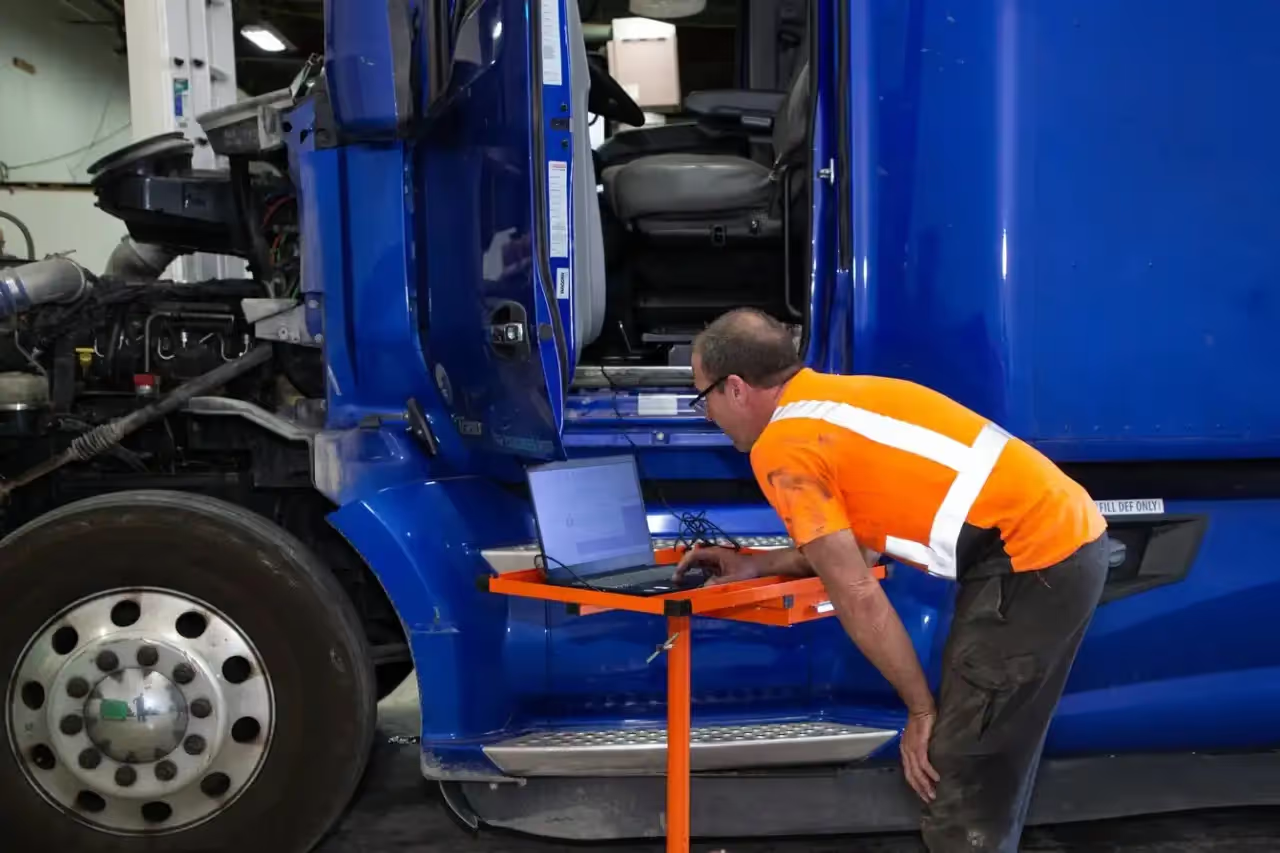
Modern fleets must handle aftertreatment faults as part of normal operations. A shop should be able to perform basic aftertreatment troubleshooting and explain how engine condition, duty cycle, and soot loading are related.
Ask how the shop handles:
- DPF regeneration strategy and appropriate conditions for forced regeneration
- Sensor-related faults versus actual soot and ash loading issues
- The role of DEF and SCR in lowering NOx emissions
- Repeat derates and how they prevent recurrence after a repair
The key factor here is whether the shop documents what happened. If the shop cannot provide a clear history of fault codes, inspection results, and verification steps, you won't be able to manage aftertreatment risk across your fleet. You will also find it hard to tell a genuine hardware problem from a duty-cycle issue that calls for operational changes.
Evaluate Brake System Discipline: “How Do You Support Brake Safety And Inspection Readiness?”
Brake failures and brake-related out-of-service conditions are serious events for fleets. They increase safety risks, disrupt schedules, and lead to enforcement actions. A fleet partner must treat braking as a critical system that requires regular inspection and adjustment.
Ask whether the shop:
- Performs routine air brake inspection checks as part of preventative maintenance
- Assesses air system integrity and air loss patterns
- Performs brake adjustment check using standard inspection methods
- Documents brake findings with sufficient detail to support unit history tracking
- Understands who is authorized and qualified to conduct brake inspections and brake work in a regulated environment
A shop with strong knowledge of fleet braking will usually explain the main air brake component chain — air supply, delivery through lines, actuation at the service chamber, mechanical force transfer through the pushrod and slack adjuster, and friction at the shoes and drums. You don't need them to give a lecture in a classroom. Instead, you want them to demonstrate that they understand the system from start to finish.
Clarify Mobile Service Versus Roadside Response: “Do You Offer Scheduled Mobile Maintenance?”
Fleets often confuse “mobile service” with “roadside,” but they are not the same operationally. A fleet partner should be able to provide:
- Scheduled mobile diesel repair support for PM and inspections at your yard when appropriate
- Emergency roadside assistance for breakdowns when needed
- Clear service boundaries: what can be done on-site versus what needs to be brought into the shop
- A scheduling system that enhances fleet workflows and reduces disruptions
This question is important because scheduled mobile support can lower logistics downtime. It also helps you keep your units in rotation while maintaining inspection discipline—especially for fleets with multiple units operating from a central location.
Ask About Fluids And Wear Control: “How Do You Standardize Fluid Practices Across The Fleet?”
Fluid management is a key control lever. Fluids lubricate, cool, and protect components in systems such as the engine, transmission, differential, and power steering. Poor fluid maintenance leads to increased friction, heat, and wear—and it often results in repeated repairs or reduced component lifespan.
Ask whether the shop is able to:
- Standardize fluid types and service schedules by unit and application
- Consistently document fluid-related findings (levels, condition indicators, leak trends)
- Explain how oil, gear oil, and transmission fluid work in lubrication and heat control
- Integrate fluid service into the fleet maintenance program rather than treating it as an afterthought
Even without sophisticated oil analysis, a skilled shop can still maintain a disciplined fluid program: regular intervals, thorough documentation, and consistent inspection points.
Evaluate Wheel-End Control: “How Do You Prevent Bearing Failures And Wheel-End Heat Events?”
Wheel-end failures are expensive and disruptive. Bearings and races reduce friction, which generates heat. When lubrication fails or wear accelerates, heat can build up quickly. Therefore, the shop’s inspection discipline is essential.
Ask if the shop includes wheel-end bearing inspection as part of PM and whether they document it.
- Signs of overheating and abnormal temperature patterns
- Noise indicators and wear patterns
- Concerns about grease condition and sealing
- Corrective actions and recheck requirements
The goal isn't to eliminate every wheel-end issue. It's to identify problems early, before they turn into roadside incidents that cause more damage and disrupt operations.
Confirm Electrical Reliability Practices: “How Do You Reduce No-Start Events?”
No-start events are costly because they happen at the worst times—before departure, mid-route, or after a short stop. A fleet partner should be able to explain and test the charging system and related electrical load behavior.
Ask about the shop’s approach to:
- Alternator testing and charging system verification
- Belt drive inspection, if applicable
- Battery condition evaluation and load performance
- Documentation that explains the failure mode so you can prevent repeat events across similar units
A practical fleet goal is to cut preventable no-start calls by detecting weak batteries and charging issues early, rather than responding after failure.
Demand Approval Controls: “How Do You Prevent Surprise Charges And Scope Creep?”
Fleet maintenance failures happen more often due to process issues than technical skill. The most common problem occurs when the scope gets out of control: work expands without approval, estimates lose relevance, and invoices become unpredictable.
Require that the shop supports:
- Written estimates prior to starting work
- A clear approval checkpoint before more work continues
- Transparent communication when inspection findings reveal new repair needs
- Documentation showing what changed, why it changed, and who approved it
This safeguards your operating budget and promotes discipline in repair planning. It also minimizes conflicts, since both sides understand when the work scope changes and the reasons behind it.
Verify Capacity And Turnaround: “Can You Support Our Fleet Size Consistently?”
A technically capable shop can still be a poor fleet partner if it cannot deliver consistent turnaround times. Fleets rely on predictability. Ask for:
- Typical PM turnaround time
- Typical turnaround time for common repairs affecting your fleet
- How do they prioritize when multiple units arrive with defects in the same week
- Whether they reserve slots for fleet partners or offer priority pathways for safety-critical issues
If a shop cannot provide consistent answers here, your fleet will face “queue downtime,” where a minor issue turns into a major failure because service cannot be scheduled quickly.
Confirm Warranty And Accountability: “How Do You Handle Comebacks?”
No shop is immune to occasional rework. The key difference is how the shop manages it. Ask for the shop’s policy on:
- Workmanship coverage
- Part warranty procedures
- Diagnostic reassessment after a repair repeats
- Documentation that differentiates a related failure from a new, unrelated defect
A fleet partner should view comebacks as feedback on the process. If the same problem occurs again, then something in the diagnostic chain, parts selection, installation method, or verification step needs improvement.
Pilot The Relationship Before You Commit Fleet-Wide
A structured pilot is the best way to test performance without risking the entire fleet. Put one or two units into the shop’s PM and repair workflow for 60–90 days, and monitor:
- Downtime for each event
- Communication quality and approval discipline
- Completeness of work order documentation
- Repeat repairs and document root-cause resolution
- Consistency of inspection findings across multiple visits
If the shop performs well under pilot conditions, you can confidently expand the relationship. If problems arise, you can fix the process or switch providers before the issues spread across your fleet.
Conclusion
A dependable Fleet Service Partnership in Irving, TX, should be viewed as an operational control system. Focus on systematic Preventive Maintenance, disciplined diagnostics, verified aftertreatment capabilities, brake inspection readiness, thorough documentation practices, controlled approvals, and consistent turnaround times. When these elements are in place, you minimize downtime, enhance cost predictability, and build a maintenance history that ensures safe, reliable fleet operations.
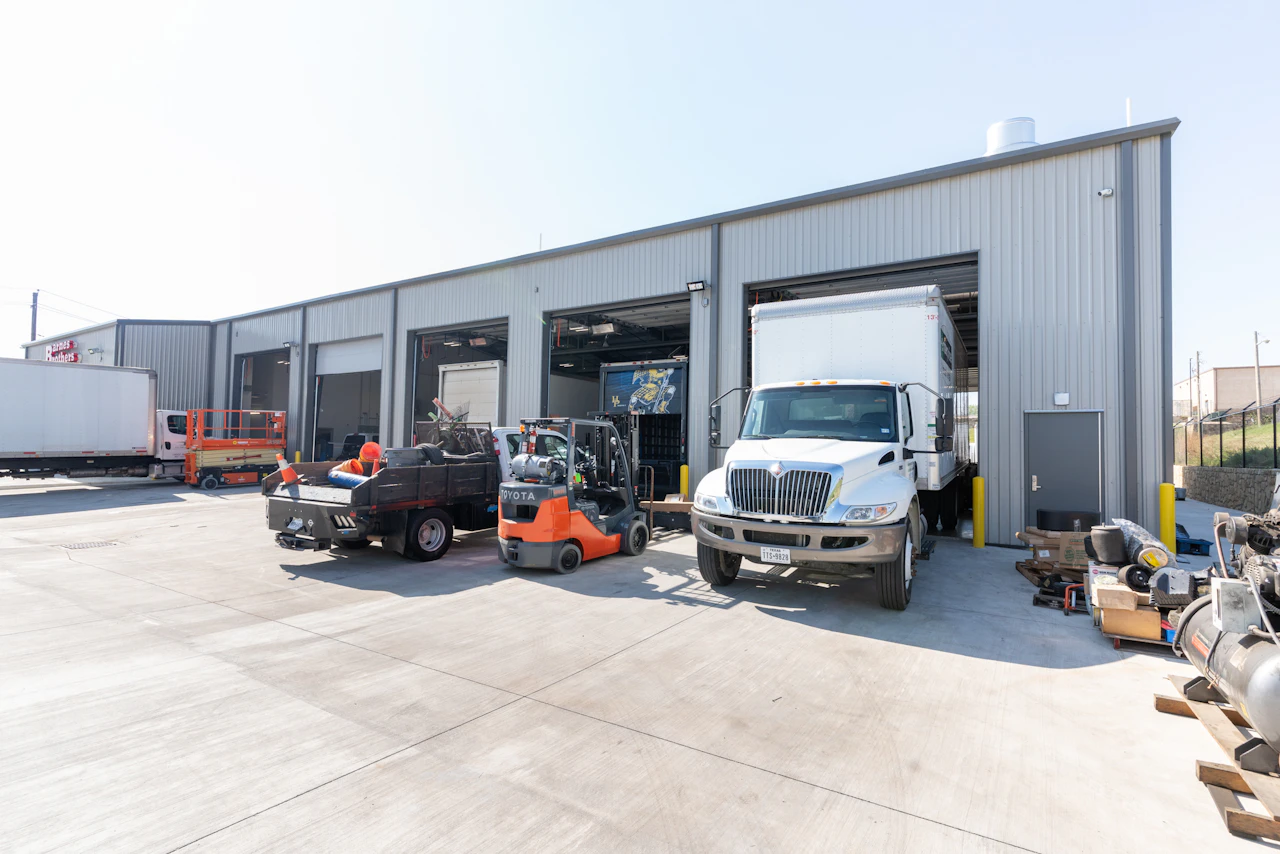
If you're evaluating fleet maintenance options in Irving, TX, use the questions in this guide as a formal checklist. When you're ready to compare PM structure, documentation practices, approval controls, and turnaround expectations, contact Barnes Brothers Truck and Trailer Repair to discuss a pilot program aligned with your fleet’s duty cycle and uptime priorities.
News & Articles
Read About The Latest in Industry
Here, you'll find regular articles covering a wide range of topics related to diesel repair, maintenance, and troubleshooting. Whether you're an operator, fleet manager, or diesel engine enthusiast, you'll find something of interest here.
.webp)
.jpg)



Recent Testimonials
Contact Barnes Brothers Truck and Trailer Repair
Barnes Brothers Truck and Trailer Repair provides Dallas & the surrounding areas with professional truck and trailer repair & fleet maintenance services from our shop in Irving, TX. Get in touch today for a quote & to schedule service.